The start of a new school year brings fresh energy and opportunities. For many children, it means opening new books, discovering new subjects, and building on skills they began last year. But for some, especially when it comes to reading, the return to school can feel daunting. While one child may eagerly turn the pages of their first novel, another might hesitate, worried that reading will be too hard or simply not interesting.
Supporting these reluctant readers is one of the most important challenges educators face in primary schools. Confidence in reading not only affects progress in literacy but also influences learning across every subject. A child who feels at ease with reading gains access to stories, ideas, and knowledge that can inspire curiosity and a lifelong love of reading.
Why some children hesitate
Reluctant reading has many causes. Some children find texts too hard. Others don’t find reading interesting. For a few, confidence is low because they compare themselves to classmates. Home background, competing media, and stress can also make reading feel like a chore rather than a pleasure. Understanding that reluctance often has several roots helps teachers choose the right response.

Step-by-step toward confidence
Helping reluctant readers grow in confidence is rarely about one single solution. What often works best is a combination of small, consistent strategies that make reading feel less intimidating and more rewarding. One effective approach is to prepare children before reading even begins, for example, by introducing a few key words or sparking curiosity with a short question linked to the story. This early connection helps reduce anxiety and builds anticipation for what is to come.

During the reading process, interactive methods can keep students engaged. Animated or read-aloud books, for example, bring the story to life while supporting fluency. Asking children to predict what might happen next or encouraging them to notice how a character feels helps them move from passive decoding to active thinking. These strategies turn reading into an experience of discovery rather than just a technical exercise.
Equally important is the reflection that follows. Simple comprehension checks, short discussions, or opportunities to share personal responses allow children to show what they understand and to see that their ideas matter. When this reflection is paired with recognition, such as a teacher’s positive feedback or a small classroom celebration, children begin to view themselves not only as readers, but as successful readers.

Over time, these repeated experiences build both skill and confidence, laying the foundation for a more positive relationship with books
Turning research into practice: a sample reading session
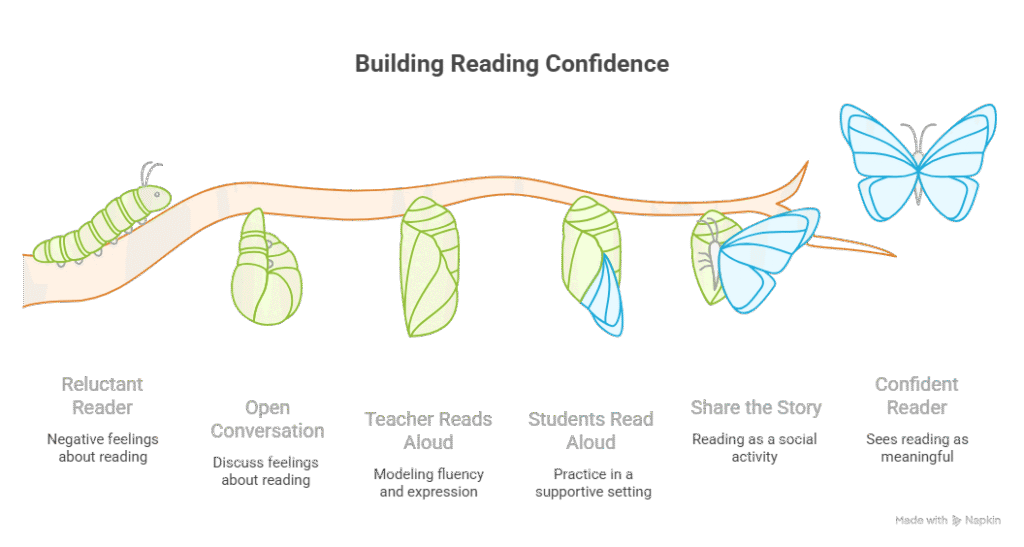
A small study by Al-Saleem (2021) offers a clear and practical model for a reading session that encourages reluctant readers. The session begins with a brief conversation about reading, during which the teacher asks students how they feel about it and listens to their responses. Next, the teacher reads the story aloud to model fluency and expression.
After this, students take turns reading short parts of the text, which gives them practice in a supportive setting. The session closes with an opportunity for students to share the story with someone else, helping them see reading as a meaningful and social activity. This step-by-step structure makes reading feel less intimidating and helps children build confidence through guided practice.
How reading platforms can help in practice
Platforms designed for young readers add features that support these strategies. A broad, curated library with read-along audio, animations, quizzes, and staged reading levels helps each child find the right book at the right time.
Teachers can use GDP- and global child privacy-compliant platform student data to see which books pupils enjoy and where they need support, saving time on assessment and planning. These are the kinds of practical benefits classrooms report when they combine curated content with teacher-led instruction.
Personalised books that match interests
New resources make it easy to build truly personal reading moments for learners. For example, Pickatale Create lets teachers make or adapt books to match a child’s interests and the curriculum. A simple exercise is to ask the class what topics excite them, then create a short class book.
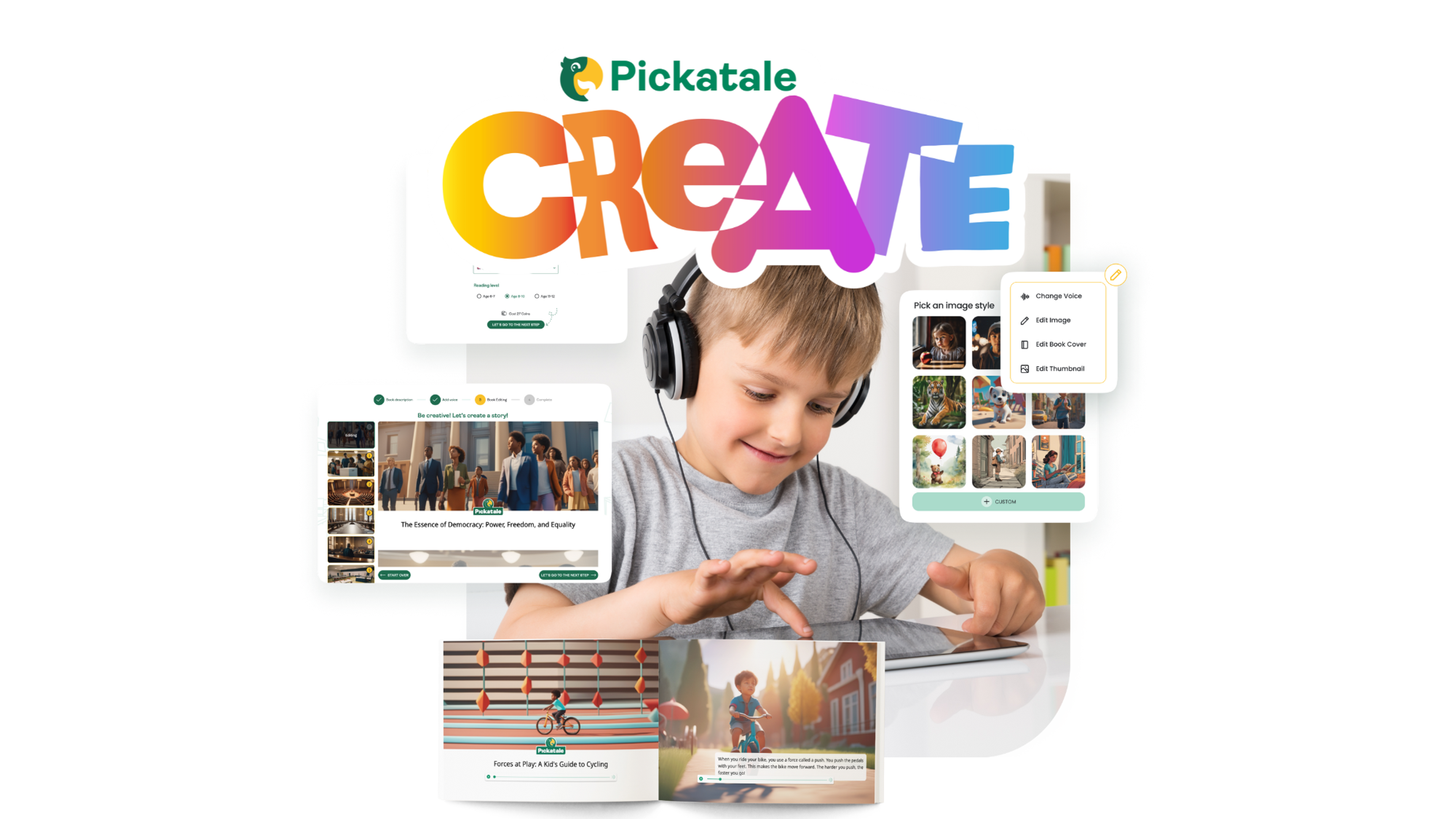
If one child loves whales, the teacher might create “A Day at Whale School.” Every child gets a version that feels familiar and fun. Pickatale Create is built to let teachers edit text, choose images, add narration, and translate books, so personalised reading becomes manageable for busy classrooms.
Celebrate progress, not perfection
Small wins matter. Short reading challenges, reading passports, class leaderboards for minutes read, and certificates for milestones help children feel their progress is real. When celebration is tied to effort and to concrete steps — finishing a level, using a new word, writing a short review — it builds lasting confidence.
Simple rituals make reading visible and social in the classroom.
Feel free to contact me if you’d like to bring engaging writing programs to your region. You can also check out my previous blog here, where I wrote about engaging writing programs for grades 3 – 6.