Video has been part of children’s learning experiences for decades. Over time, its role, format, access and impact have evolved dramatically.
From rolling TV carts and shared classroom moments to personalized, on-demand learning experiences at home, video has moved from being an occasional supplement to a central component of many educational products. Understanding how and why video works is essential for educators, publishers, and edtech developers designing effective learning experiences for children.
A Brief History of Video in Education
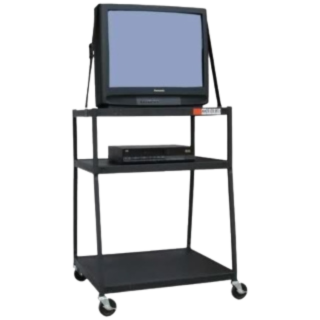
For many students who grew up in the 1980s and 1990s, video in school was a special event. The unmistakable sight of a TV cart being wheeled into the classroom meant a break from routine, and often a shared viewing experience. Educational shows like Bill Nye the Science Guy made complex scientific concepts entertaining and memorable, blending humor, experiments, and storytelling in a way textbooks could not.
By the mid-1990s, video use became more structured. Some schools introduced media or computer labs where students would rotate in for specific lessons. Foreign language classes were early adopters, using video to expose students to authentic accents, cultural contexts, and conversational language. Still, video was tied to physical media: VHS tapes, DVDs, and even the short-lived laserdisc.
The 2000s marked a major shift. Video moved from physical formats to online streaming libraries. Services like United Streaming (later Discovery Education Streaming) allowed schools and teachers to subscribe to large collections of educational videos. This change dramatically lowered friction: no more rewinding tapes or booking shared resources. Teachers could search, select, and play content on demand.
As internet bandwidth improved, educational video exploded. More content moved online, quality increased, and new formats emerged. Interactive video, clickable timelines, and quizzes embedded directly into video experiences became possible. At the same time, at-home learning video grew rapidly. Early examples like the BBC’s Muzzy focused on soft skills and basic language exposure, while newer products introduced scaffolded learning paths, clear learning objectives, and curriculum alignment.Today, we are in another transition phase. AI-generated video is becoming more common, especially for explainer content and visualization-heavy subjects. While opinions vary widely (from enthusiasm to concern), there is likely a middle ground. AI can be powerful for illustrating hard-to-explain concepts in science or history, while human-created storytelling and filmmaking remain critical for emotional engagement and narrative depth.
This blog does not aim to debate AI’s role, but rather to focus on how video, regardless of how it is produced, is used effectively in children’s learning.
How Is Video Used in the Classroom?
In classrooms, video is most often used as a support tool rather than a standalone lesson. Teachers use short clips to:
- Introduce a new concept or spark curiosity
- Provide visual explanations of abstract ideas
- Reinforce or review material already taught
- Expose students to real-world examples, experiments, or historical footage
Effective classroom video use is typically intentional and time-bound.
A three- to eight-minute clip is far more common than a full-length program. Teachers often pause videos to ask questions, prompt discussion, or connect what students are seeing to learning objectives.
Teachers pair classroom video with interactivity, questions, note-taking prompts, and follow-up activities. When educators integrate video into a broader instructional design, it can improve comprehension and retention, especially in complex or visual subjects such as science, geography, and social studies.

How Is Video Used in At-Home Educational and Edutainment Products?
At home, video plays a different role. It is often designed to be more self-directed and engaging, sometimes blurring the line between education and entertainment. These products range from subscription streaming platforms and learning apps to short-form video content on tablets and smart TVs.
At-home educational video often focuses on:

Unlike classroom use, at-home video must hold a child’s attention without a teacher present. This puts greater emphasis on pacing, storytelling, characters, and production quality. Many successful products combine video with light interactivity (games, prompts, or creative extensions) to deepen engagement without overwhelming the learner.
Short-Form vs. Long-Form Video
One of the most important design choices in educational video is length. Short-form video (typically under 10 minutes) dominates both classroom and at-home learning, especially for younger audiences. Short videos align better with children’s attention spans and are easier to integrate into lessons or daily routines. Long-form video still has a place, particularly for narrative-driven learning (documentaries, story-based science); older students who can sustain attention; or family co-viewing experiences, for example.
The key distinction is intent. Short-form video is often modular and instructional, while long-form video leans more heavily on storytelling and immersion.
Learning Modalities: Video, Reading, and Audio
Although the idea of fixed “learning styles” has been questioned, research in cognitive science supports the use of multiple learning modalities. Studies on multimedia learning, such as those by Richard Mayer, show that learners understand and remember content better when clear visuals and well-designed text are combined. In practice, video is effective for showing processes, emotions, and real-world situations; reading supports deeper thinking, reflection, and vocabulary development; and audio is useful for storytelling, pronunciation, and language exposure. Strong educational products do not rely on a single format but integrate video with text, discussion, and practice as part of a structured learning experience.
Interactivity can further increase the value of video when it clearly supports the learning goal. Examples include short embedded questions, reflection pauses, or simple decision points that guide attention and reinforce key ideas. However, interactivity is not automatically effective. Too many interruptions can break focus and overload learners, especially younger audiences.
Final Thoughts: Video as a Strategic Learning Tool
Video is a mature and flexible medium that, when used with clear intent, can support understanding, engagement, and access to learning. Effective educational products do not use video to replace teachers, books, or hands-on activities, but to complement them within a well-designed learning experience. As video content continues to grow, the key difference is not volume or production quality alone, but purpose. Clear learning objectives, appropriate design for the target age group, thoughtful pacing, and integration with other learning modalities are more important than visual effects or new technology trends.
For educators, publishers, and edtech teams, this means focusing on how video fits into a broader learning journey and how it encourages learners to think, discuss, read, and create beyond the screen.

Sensical is the completely free, kid-safe streaming platform made just for ages 2–12. Every show is handpicked by experts to spark curiosity and inspire learning. With 50+ channels built around kids’ favorite topics, Sensical makes screen time smart, safe, and fun.
Reach out if you’d like to bring video programs to your region. Check my oldest blog, where I talked about Reluctant to Confident Readers and how children can discover the joy of reading.